Buy remove-account.com ?
We are moving the project
remove-account.com .
Are you interested in purchasing the domain
remove-account.com ?
domain@kv-gmbh.de · 0541-91531010
Buy remove-account.com ?
How do I deactivate my central locking system?
To deactivate your central locking system, you will need to locate the central locking button or switch inside your vehicle. This button is usually located on the driver's side door or on the dashboard. Press or flip the button to deactivate the central locking system. If your vehicle has a key fob, you can also use it to deactivate the central locking system by pressing the unlock button. If you are still having trouble deactivating the central locking system, refer to your vehicle's owner's manual for specific instructions. **
How can one remove this clamp?
To remove the clamp, first, locate the release lever or button on the clamp. Press or pull the release lever/button to disengage the clamp's locking mechanism. Once the clamp is released, carefully slide or lift it off the object or surface it is attached to. Be cautious of any tension or pressure that may be released when removing the clamp to avoid injury. **


Similar search terms for Locking-C-Clamp-Pliers
Top-Angebote
Products related to Locking-C-Clamp-Pliers:


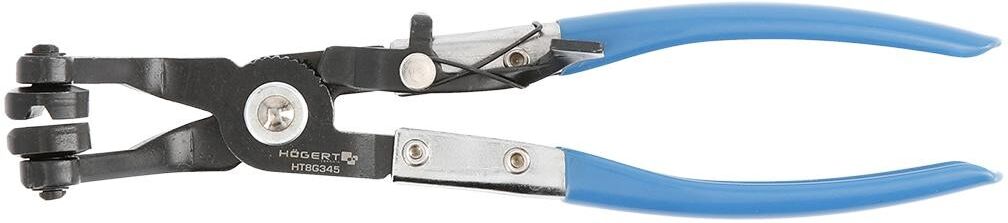
-
How do you remove an extension using only pliers?
To remove an extension using only pliers, first, grip the extension firmly with the pliers. Then, twist the extension in a counterclockwise direction to loosen it from the object it is attached to. Continue twisting until the extension is completely removed. Be careful not to apply too much force to avoid damaging the extension or the object it is attached to. **
-
What does positive locking power transmission and force-locking power transmission mean, as well as positive locking and force-locking?
Positive locking power transmission refers to a system where the connection between components is secure and prevents any slipping or movement during operation. This ensures that power is efficiently transferred without any loss. Force-locking power transmission, on the other hand, relies on friction or mechanical interlocking to transmit power, providing a strong and reliable connection. Positive locking refers to a mechanism that securely holds components together, while force-locking relies on external forces to maintain the connection. **
-
What does positive locking power transmission and frictional locking power transmission mean, as well as positive locking and frictional locking?
Positive locking power transmission refers to a system where the connection between two components is secure and does not allow for any slipping or movement. This is achieved through mechanisms such as gears or splines that ensure a precise and fixed transfer of power. On the other hand, frictional locking power transmission relies on the friction between two surfaces to transfer power. Positive locking refers to a mechanism that physically prevents movement or disengagement, while frictional locking relies on the resistance generated by friction to maintain the connection between components. **
-
Why is my pliers squeaking?
Your pliers may be squeaking due to a lack of lubrication on the pivot point or hinge. Over time, dirt and debris can build up in these areas, causing friction and resulting in the squeaking sound. Applying a small amount of lubricant, such as oil or grease, to the pivot point can help reduce the squeaking and improve the overall performance of your pliers. If the squeaking persists after lubrication, there may be a more serious issue with the pliers that requires professional inspection and repair. **
What is a piercing pliers?
A piercing pliers is a specialized tool used in body piercing to hold and stabilize the skin during the piercing process. It typically has a clamp-like design with a sharp, pointed end that is used to create a hole in the skin for the jewelry to be inserted. Piercing pliers help piercers maintain control and precision while performing the piercing, ensuring a clean and accurate result. **
What distinguishes a regular clamp from an Ottoman clamp?
A regular clamp is a simple tool used to hold objects together, typically made of metal or plastic with a screw mechanism to tighten and secure the object. On the other hand, an Ottoman clamp is specifically designed to be used on furniture, particularly on the corners of ottomans and other upholstered pieces. Ottoman clamps are often larger and have a wider grip capacity to accommodate the thicker and softer materials used in furniture construction. Additionally, Ottoman clamps may have protective padding or covers to prevent damage to the furniture during clamping. **
Top-Angebote
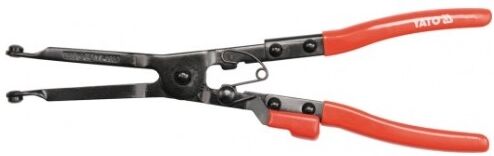
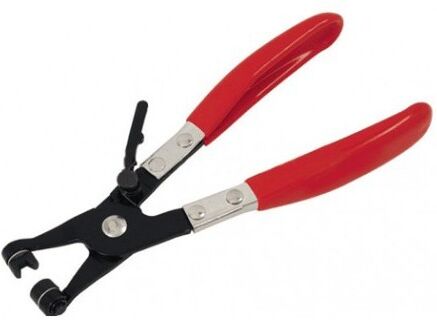
Products related to Locking-C-Clamp-Pliers:
-
How do I deactivate my central locking system?
To deactivate your central locking system, you will need to locate the central locking button or switch inside your vehicle. This button is usually located on the driver's side door or on the dashboard. Press or flip the button to deactivate the central locking system. If your vehicle has a key fob, you can also use it to deactivate the central locking system by pressing the unlock button. If you are still having trouble deactivating the central locking system, refer to your vehicle's owner's manual for specific instructions. **
-
How can one remove this clamp?
To remove the clamp, first, locate the release lever or button on the clamp. Press or pull the release lever/button to disengage the clamp's locking mechanism. Once the clamp is released, carefully slide or lift it off the object or surface it is attached to. Be cautious of any tension or pressure that may be released when removing the clamp to avoid injury. **
-
How do you remove an extension using only pliers?
To remove an extension using only pliers, first, grip the extension firmly with the pliers. Then, twist the extension in a counterclockwise direction to loosen it from the object it is attached to. Continue twisting until the extension is completely removed. Be careful not to apply too much force to avoid damaging the extension or the object it is attached to. **
-
What does positive locking power transmission and force-locking power transmission mean, as well as positive locking and force-locking?
Positive locking power transmission refers to a system where the connection between components is secure and prevents any slipping or movement during operation. This ensures that power is efficiently transferred without any loss. Force-locking power transmission, on the other hand, relies on friction or mechanical interlocking to transmit power, providing a strong and reliable connection. Positive locking refers to a mechanism that securely holds components together, while force-locking relies on external forces to maintain the connection. **
Similar search terms for Locking-C-Clamp-Pliers
-
What does positive locking power transmission and frictional locking power transmission mean, as well as positive locking and frictional locking?
Positive locking power transmission refers to a system where the connection between two components is secure and does not allow for any slipping or movement. This is achieved through mechanisms such as gears or splines that ensure a precise and fixed transfer of power. On the other hand, frictional locking power transmission relies on the friction between two surfaces to transfer power. Positive locking refers to a mechanism that physically prevents movement or disengagement, while frictional locking relies on the resistance generated by friction to maintain the connection between components. **
-
Why is my pliers squeaking?
Your pliers may be squeaking due to a lack of lubrication on the pivot point or hinge. Over time, dirt and debris can build up in these areas, causing friction and resulting in the squeaking sound. Applying a small amount of lubricant, such as oil or grease, to the pivot point can help reduce the squeaking and improve the overall performance of your pliers. If the squeaking persists after lubrication, there may be a more serious issue with the pliers that requires professional inspection and repair. **
-
What is a piercing pliers?
A piercing pliers is a specialized tool used in body piercing to hold and stabilize the skin during the piercing process. It typically has a clamp-like design with a sharp, pointed end that is used to create a hole in the skin for the jewelry to be inserted. Piercing pliers help piercers maintain control and precision while performing the piercing, ensuring a clean and accurate result. **
-
What distinguishes a regular clamp from an Ottoman clamp?
A regular clamp is a simple tool used to hold objects together, typically made of metal or plastic with a screw mechanism to tighten and secure the object. On the other hand, an Ottoman clamp is specifically designed to be used on furniture, particularly on the corners of ottomans and other upholstered pieces. Ottoman clamps are often larger and have a wider grip capacity to accommodate the thicker and softer materials used in furniture construction. Additionally, Ottoman clamps may have protective padding or covers to prevent damage to the furniture during clamping. **
* All prices are inclusive of VAT and, if applicable, plus shipping costs. The offer information is based on the details provided by the respective shop and is updated through automated processes. Real-time updates do not occur, so deviations can occur in individual cases. ** Note: Parts of this content were created by AI.