Buy remove-account.com ?
We are moving the project
remove-account.com .
Are you interested in purchasing the domain
remove-account.com ?
domain@kv-gmbh.de · 0541-91531010
Buy remove-account.com ?
How to remove acetone as thermal paste?
To remove acetone as thermal paste, you can use isopropyl alcohol and a lint-free cloth. First, make sure the computer is turned off and unplugged. Then, dampen the cloth with isopropyl alcohol and gently wipe away the acetone residue. Be sure to thoroughly clean the area to ensure all traces of acetone are removed before applying new thermal paste. **
How do you remove old thermal paste?
To remove old thermal paste, you will need isopropyl alcohol, cotton swabs, and a lint-free cloth. First, disconnect the CPU cooler from the processor. Next, use a cotton swab dipped in isopropyl alcohol to gently rub and dissolve the old thermal paste. Once the majority of the paste is removed, use a clean cotton swab to ensure all residue is gone. Finally, wipe the surface with a lint-free cloth to ensure it is completely clean before applying new thermal paste. **
Similar search terms for Thermal
Top-Angebote
Products related to Thermal:
-
Testo 872s Thermal Imaging CameraTesto 872s Thermal Imaging Camera (0560 8725) The Testo 872s Thermal Imaging Camera delivers industry-leading thermal resolution, precision and smart connectivity, making it a strong tool for HVAC technicians, electricians, industrial engineers and building inspectors. With a high infrared resolution of 320 x 240 pixels (enhanced to 640 x 480 pixels via SuperResolution), the 872s captures ultra-sharp thermal images, allowing precise detection of faults in electrical systems, insulation, machinery and structures. Equipped with an integrated laser marker, the 872s highlights the exact measuring point in real time, making on-site analysis fast, accurate and traceable. With thermal sensitivity of 0.05°C (50mK) and a temperature range from -30°C to +650°C, even the smallest heat differences are visible, useful for preventive maintenance and failure det2448,00 £*Shipping: 0,00 £Secure redirect to the provider
-
Testo 868s Thermal Imaging CameraTesto 868s Thermal Imaging Camera (0560 8684) The Testo 868s Thermal Imaging Camera delivers outstanding thermal performance and smart connectivity, making it a strong choice for HVAC engineers, electricians and building inspectors. With a 160 x 120 pixel infrared resolution (enhanced to 320 x 240 with SuperResolution) and a wide temperature detection range from -30°C to +650°C, this thermal imager captures sharp, accurate heat signatures across a variety of applications. Designed to detect insulation defects, thermal bridges, overheating electrical components and leaks, the 868s features thermal sensitivity of 0.08°C (80mK) for pinpoint precision. Built-in tools like automatic hot/cold spot recognition, testo ScaleAssist and ε-Assist ensure fast, consistent results with optimised colour scaling and emissivity settings. With integrated Wi1218,00 £*Shipping: 0,00 £Secure redirect to the provider
-
Testo 865s Thermal Imaging CameraTesto 865s - Thermal Imaging Camera (160 x 120 pixels) – Precision, Efficiency & User-Friendly Technology The Testo 865s Thermal Imaging Camera is engineered for professionals, offering high-resolution thermography and essential functions tailored for a contractor's daily work. Designed for fast, efficient use, this thermal imager features advanced ScaleAssist technology to automatically adjust the thermal image scale for building thermography, while the integrated IFOV Warner ensures accurate measurements by displaying the measurement spot size on the thermal image. The Testo 865s guarantees accurate infrared images for maintenance, quality assurance, and production control. Key Applications of the Testo 865s Thermal Imager:792,00 £*Shipping: 0,00 £Secure redirect to the provider
-
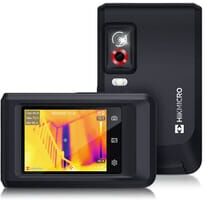
Hikmicro PocketE Thermal Imaging CameraHikmicro PocketE Thermal Imaging Camera (POCKETE) The Hikmicro PocketE Thermal Imaging Camera is a pocket-sized, professional thermal camera for building inspections, HVAC, electrical and mechanical maintenance. With a 96 x 96 (9,216 pixel) infrared resolution and SuperIR enhancement upscaling images to 240 x 240 (57,600 pixels), the PocketE gives the clarity needed to identify faults quickly and accurately. Featuring a dual camera system with a built-in IR sensor and a 0.3MP visible camera, the PocketE has five image modes (Thermal, Visual, PIP, Fusion and Blending) for maximum versatility. Its 3.5 LCD touchscreen, Wi-Fi connectivity and onboard storage make it a compact yet capable tool for professionals. Key Features & Benefits SuperIR Enhancement: Upscales 96 x 96 IR286,80 £*Shipping: 0,00 £Secure redirect to the provider


-
What is used to remove thermal paste?
Isopropyl alcohol and a lint-free cloth or cotton swab are commonly used to remove thermal paste from a CPU or GPU. The isopropyl alcohol helps to dissolve and lift the thermal paste, while the lint-free cloth or cotton swab allows for gentle and precise cleaning without leaving behind any residue. It's important to use a high percentage of isopropyl alcohol, such as 90% or higher, for effective removal of thermal paste. **
-
What can be used to remove thermal paste?
Isopropyl alcohol is commonly used to remove thermal paste from surfaces such as CPUs and heat sinks. It is effective at breaking down the paste without damaging the components. Additionally, cotton swabs or a lint-free cloth can be used to gently wipe away the thermal paste residue. It is important to ensure that all residue is completely removed before applying new thermal paste. **
-
How to remove acetone as a thermal paste?
To remove acetone as a thermal paste, you can use isopropyl alcohol (rubbing alcohol) and a lint-free cloth. First, make sure the computer is turned off and unplugged. Then, dampen the cloth with isopropyl alcohol and gently wipe away the acetone residue. Be sure to let the area dry completely before applying new thermal paste. It's important to handle the isopropyl alcohol carefully and work in a well-ventilated area. **
-
How do I remove thermal paste with alcohol?
To remove thermal paste with alcohol, you will need isopropyl alcohol (at least 90% concentration), cotton swabs, and paper towels. First, power off and unplug your computer. Then, apply a small amount of alcohol to a cotton swab and gently rub it onto the thermal paste until it starts to dissolve. Use a dry cotton swab or paper towel to wipe away the dissolved paste. Repeat this process until all the thermal paste is removed. Be sure to let the surface dry completely before applying new thermal paste. **

Can you remove thermal paste with this disinfectant?
No, disinfectant is not recommended for removing thermal paste from electronic components. It is best to use isopropyl alcohol or a specialized thermal paste remover for this purpose. Disinfectants may leave residue or damage the components, so it is important to use the appropriate cleaning solution for electronics. **
Can I remove thermal paste with 95% bioethanol?
Yes, you can remove thermal paste with 95% bioethanol. Bioethanol is a good solvent for removing thermal paste as it can effectively dissolve the paste without damaging the components. However, it is important to ensure that the components are completely dry before reapplying new thermal paste to avoid any potential damage. Additionally, make sure to use the bioethanol in a well-ventilated area and follow proper safety precautions when handling flammable substances. **
Top-Angebote
Products related to Thermal:
-
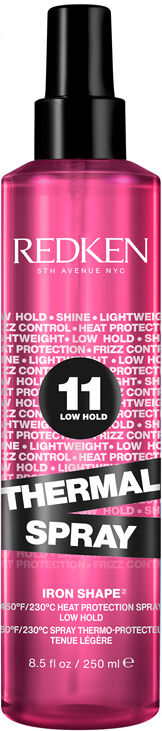
Redken Thermal Spray 250mlRedken Thermal Spray protects and repairs hair from thermal damage. Key Benefits: Heat protection 230°C 24 hour frizz protection Increased shine Bottle made from recycled plastic (excluding pump and cap) With a lightweight formula, this heat protector protects hair from up to 230°C and is suitable for all hair types. Frizz is reduced and hair is left with a glossy shine for that salon-fresh finish from root to tip. Formulated with Redken’s Heat Re-Style technology, this protecting mist can be applied once and still allow for endless re-styling throughout the day. Ingredients: Aqua / water • Isobutane • Propylene Glycol • Sodium Polystyrene Sulfonate • Carbomer • Triethanolamine • Phenoxyethanol • Peg-40 Hydrogenated castor oil • Parfum / fragrance • Peg-60 Almond Glycerides • Polysorbate 20 • Cocamidopropyl Betaine • Benzophenone-4 • Glyceryl Laurate • Sodium Chloride • Hydroxypropyltrimonium Hydrolyzed Wheat Protein • Glycerin • Alpha-isomethyl Ionone • Xylose • Linalool • Hydroxycitronellal • Hexyl Cinnamal • Citronellol • Sodium Benzoate • Geraniol • Limonene • Benzyl Alcohol • Isoeugenol20,40 £*Shipping: 0,00 £Secure redirect to the provider
-
Testo 871s Thermal Imaging CameraTesto 871s Thermal Imaging Camera (0560 8716) The Testo 871s Thermal Imaging Camera is a professional choice for high-resolution thermography, wireless connectivity and real-time data integration. With an infrared resolution of 240 x 180 pixels (boosted to 480 x 360 with SuperResolution), it captures sharp thermal images, well suited to HVAC, electrical and building diagnostics. The 871s offers a temperature detection range from -30°C to +650°C with thermal sensitivity of 80mK (0.08°C) — higher sensitivity than the 865s and 868s, useful where spotting smaller temperature differences matters, such as preventative maintenance monitoring. It features a 35° x 26° field of view for inspecting large areas quickly, with automatic hot/cold spot detection highlighting problem zones instantly. Via Bluetooth, it pairs with the Testo 770-3 Clamp M2218,80 £*Shipping: 0,00 £Secure redirect to the provider
-
Testo 872s Thermal Imaging CameraTesto 872s Thermal Imaging Camera (0560 8725) The Testo 872s Thermal Imaging Camera delivers industry-leading thermal resolution, precision and smart connectivity, making it a strong tool for HVAC technicians, electricians, industrial engineers and building inspectors. With a high infrared resolution of 320 x 240 pixels (enhanced to 640 x 480 pixels via SuperResolution), the 872s captures ultra-sharp thermal images, allowing precise detection of faults in electrical systems, insulation, machinery and structures. Equipped with an integrated laser marker, the 872s highlights the exact measuring point in real time, making on-site analysis fast, accurate and traceable. With thermal sensitivity of 0.05°C (50mK) and a temperature range from -30°C to +650°C, even the smallest heat differences are visible, useful for preventive maintenance and failure det2448,00 £*Shipping: 0,00 £Secure redirect to the provider
-
Testo 868s Thermal Imaging CameraTesto 868s Thermal Imaging Camera (0560 8684) The Testo 868s Thermal Imaging Camera delivers outstanding thermal performance and smart connectivity, making it a strong choice for HVAC engineers, electricians and building inspectors. With a 160 x 120 pixel infrared resolution (enhanced to 320 x 240 with SuperResolution) and a wide temperature detection range from -30°C to +650°C, this thermal imager captures sharp, accurate heat signatures across a variety of applications. Designed to detect insulation defects, thermal bridges, overheating electrical components and leaks, the 868s features thermal sensitivity of 0.08°C (80mK) for pinpoint precision. Built-in tools like automatic hot/cold spot recognition, testo ScaleAssist and ε-Assist ensure fast, consistent results with optimised colour scaling and emissivity settings. With integrated Wi1218,00 £*Shipping: 0,00 £Secure redirect to the provider
-
How to remove acetone as thermal paste?
To remove acetone as thermal paste, you can use isopropyl alcohol and a lint-free cloth. First, make sure the computer is turned off and unplugged. Then, dampen the cloth with isopropyl alcohol and gently wipe away the acetone residue. Be sure to thoroughly clean the area to ensure all traces of acetone are removed before applying new thermal paste. **
-
How do you remove old thermal paste?
To remove old thermal paste, you will need isopropyl alcohol, cotton swabs, and a lint-free cloth. First, disconnect the CPU cooler from the processor. Next, use a cotton swab dipped in isopropyl alcohol to gently rub and dissolve the old thermal paste. Once the majority of the paste is removed, use a clean cotton swab to ensure all residue is gone. Finally, wipe the surface with a lint-free cloth to ensure it is completely clean before applying new thermal paste. **
-
What is used to remove thermal paste?
Isopropyl alcohol and a lint-free cloth or cotton swab are commonly used to remove thermal paste from a CPU or GPU. The isopropyl alcohol helps to dissolve and lift the thermal paste, while the lint-free cloth or cotton swab allows for gentle and precise cleaning without leaving behind any residue. It's important to use a high percentage of isopropyl alcohol, such as 90% or higher, for effective removal of thermal paste. **
-
What can be used to remove thermal paste?
Isopropyl alcohol is commonly used to remove thermal paste from surfaces such as CPUs and heat sinks. It is effective at breaking down the paste without damaging the components. Additionally, cotton swabs or a lint-free cloth can be used to gently wipe away the thermal paste residue. It is important to ensure that all residue is completely removed before applying new thermal paste. **
Similar search terms for Thermal
-
Testo 865s Thermal Imaging CameraTesto 865s - Thermal Imaging Camera (160 x 120 pixels) – Precision, Efficiency & User-Friendly Technology The Testo 865s Thermal Imaging Camera is engineered for professionals, offering high-resolution thermography and essential functions tailored for a contractor's daily work. Designed for fast, efficient use, this thermal imager features advanced ScaleAssist technology to automatically adjust the thermal image scale for building thermography, while the integrated IFOV Warner ensures accurate measurements by displaying the measurement spot size on the thermal image. The Testo 865s guarantees accurate infrared images for maintenance, quality assurance, and production control. Key Applications of the Testo 865s Thermal Imager:792,00 £*Shipping: 0,00 £Secure redirect to the provider
-
Hikmicro PocketE Thermal Imaging CameraHikmicro PocketE Thermal Imaging Camera (POCKETE) The Hikmicro PocketE Thermal Imaging Camera is a pocket-sized, professional thermal camera for building inspections, HVAC, electrical and mechanical maintenance. With a 96 x 96 (9,216 pixel) infrared resolution and SuperIR enhancement upscaling images to 240 x 240 (57,600 pixels), the PocketE gives the clarity needed to identify faults quickly and accurately. Featuring a dual camera system with a built-in IR sensor and a 0.3MP visible camera, the PocketE has five image modes (Thermal, Visual, PIP, Fusion and Blending) for maximum versatility. Its 3.5 LCD touchscreen, Wi-Fi connectivity and onboard storage make it a compact yet capable tool for professionals. Key Features & Benefits SuperIR Enhancement: Upscales 96 x 96 IR286,80 £*Shipping: 0,00 £Secure redirect to the provider
-
Hikmicro Pocket 2 Thermal Imaging CameraHikmicro Pocket 2 Thermal Imaging Camera (POCKET2) The Hikmicro Pocket 2 Thermal Camera is a small but capable thermal imager for professionals in building inspection, HVAC, electrical diagnostics and industrial maintenance. Compact enough to fit in a pocket and packed with features, it combines a 256 x 192 VOx thermal sensor (49,152 pixels) with an 8MP optical lens for clear thermal and visual imaging. With a wide temperature range from -20°C to +400°C and accuracy of ±2°C/±2%, the Pocket 2 delivers reliable results in demanding environments. A smooth 25Hz frame rate, 3.5 LCD touchscreen and multiple imaging modes (Thermal, Optical, Fusion, PIP) make it an intuitive tool for fast fault detection and reporting. Key Features & Benefits High-Resolution Thermal Sensor:502,80 £*Shipping: 0,00 £Secure redirect to the provider
-
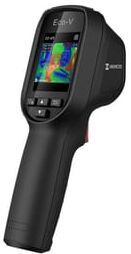
Hikmicro ECO-V Thermal Imaging CameraHikmicro ECO-V Thermal Imaging Camera The Hikmicro ECO-V Thermal Imaging Camera is a compact, rugged, professional tool for building inspections, HVAC troubleshooting, electrical diagnostics and maintenance work. With its dual camera system (thermal + visual) and Fusion mode, visual detail can be blended with thermal imagery for sharper, more actionable results. Featuring a 96 x 96 IR sensor (9,216 pixels) enhanced to 240 x 240 (57,600 pixels) with SuperIR, the ECO-V delivers high-clarity thermal images at a smooth 25Hz refresh rate. A wide 50° field of view suits scanning large areas quickly, and a temperature measurement range of -20°C to 550°C with ±2°C/±2% accuracy suits both residential and industrial applications. Built tough with IP54 dust/water protection and 2m drop resistance, the ECO-V is designed for real-world fieldwork.250,80 £*Shipping: 0,00 £Secure redirect to the provider
-
How to remove acetone as a thermal paste?
To remove acetone as a thermal paste, you can use isopropyl alcohol (rubbing alcohol) and a lint-free cloth. First, make sure the computer is turned off and unplugged. Then, dampen the cloth with isopropyl alcohol and gently wipe away the acetone residue. Be sure to let the area dry completely before applying new thermal paste. It's important to handle the isopropyl alcohol carefully and work in a well-ventilated area. **
-
How do I remove thermal paste with alcohol?
To remove thermal paste with alcohol, you will need isopropyl alcohol (at least 90% concentration), cotton swabs, and paper towels. First, power off and unplug your computer. Then, apply a small amount of alcohol to a cotton swab and gently rub it onto the thermal paste until it starts to dissolve. Use a dry cotton swab or paper towel to wipe away the dissolved paste. Repeat this process until all the thermal paste is removed. Be sure to let the surface dry completely before applying new thermal paste. **
-
Can you remove thermal paste with this disinfectant?
No, disinfectant is not recommended for removing thermal paste from electronic components. It is best to use isopropyl alcohol or a specialized thermal paste remover for this purpose. Disinfectants may leave residue or damage the components, so it is important to use the appropriate cleaning solution for electronics. **
-
Can I remove thermal paste with 95% bioethanol?
Yes, you can remove thermal paste with 95% bioethanol. Bioethanol is a good solvent for removing thermal paste as it can effectively dissolve the paste without damaging the components. However, it is important to ensure that the components are completely dry before reapplying new thermal paste to avoid any potential damage. Additionally, make sure to use the bioethanol in a well-ventilated area and follow proper safety precautions when handling flammable substances. **
* All prices are inclusive of VAT and, if applicable, plus shipping costs. The offer information is based on the details provided by the respective shop and is updated through automated processes. Real-time updates do not occur, so deviations can occur in individual cases. ** Note: Parts of this content were created by AI.